Why Version Control Exists: The Pendrive Problem
Before Git, GitHub, or any modern version control systems existed, developers still wrote software. But the way they managed code was risky, messy, and stressful. One small mistake could wipe out days of work. This article explains why version control exists using a simple and relatable idea: the Pendrive Problem.
Life Before Version Control
Imagine a time when there was no Git.
No GitHub.
No branches.
No commit history.
Developers relied on very basic tools to manage their code:
Pendrives
Emails
ZIP files
Local folders with confusing names
The Pendrive Analogy in Software Development
Let’s say a team of three developers is working on the same project.
Step 1: Sharing Code
Developer A writes some code and copies it to a pendrive
The pendrive is given to Developer B
Developer B edits the code and gives it to Developer C
So far, so good… right?
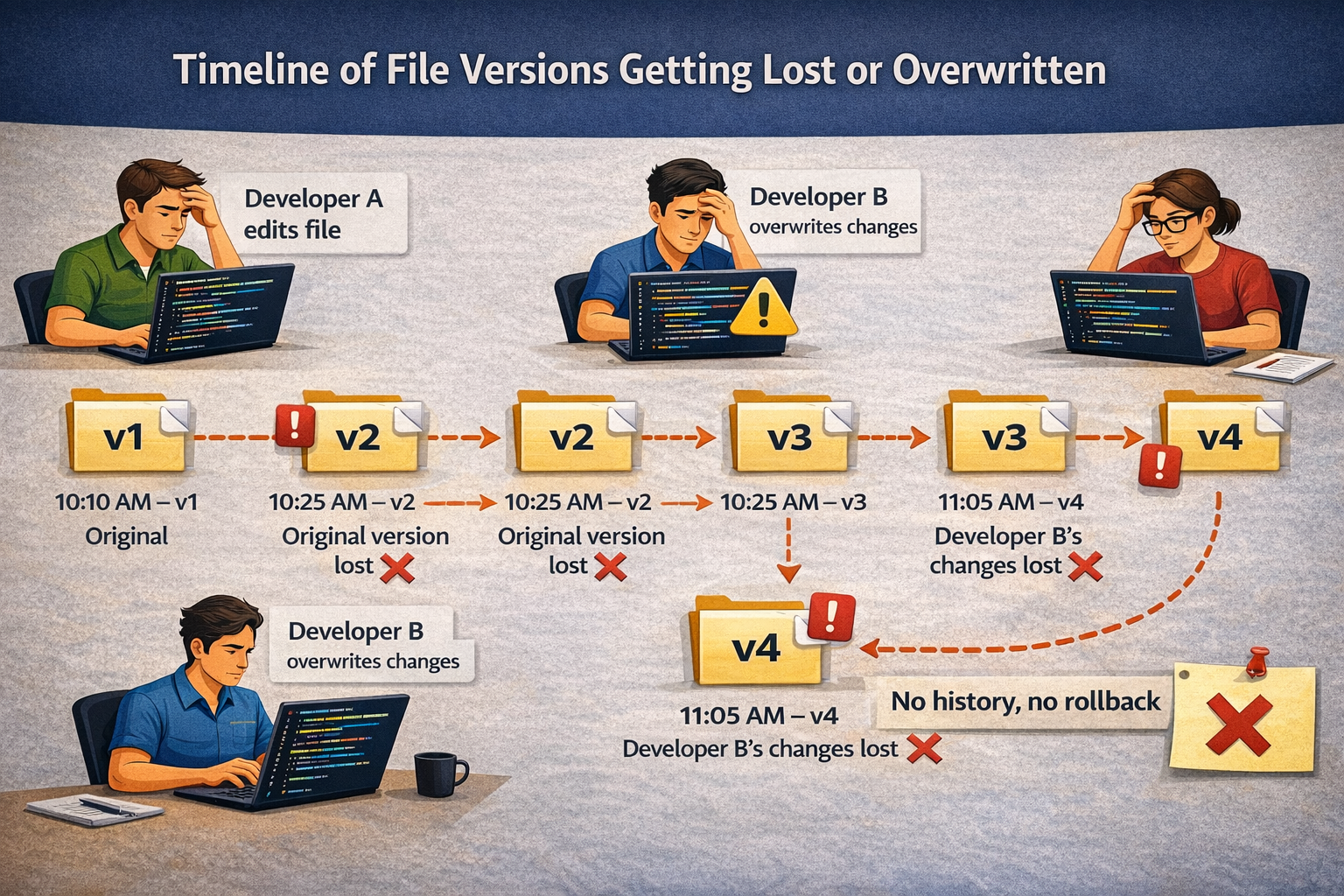
Step 2: The First Problem — Overwriting Code
Developer C makes changes but:
Accidentally deletes some working logic
Copies their version back to the pendrive
Hands it back to Developer A
Now Developer A’s original work is gone forever.
No backup.
No history.
No undo.
Common Problems Before Version Control
1. Code Overwriting
Two developers work on the same file:
One fixes a bug
Another adds a feature
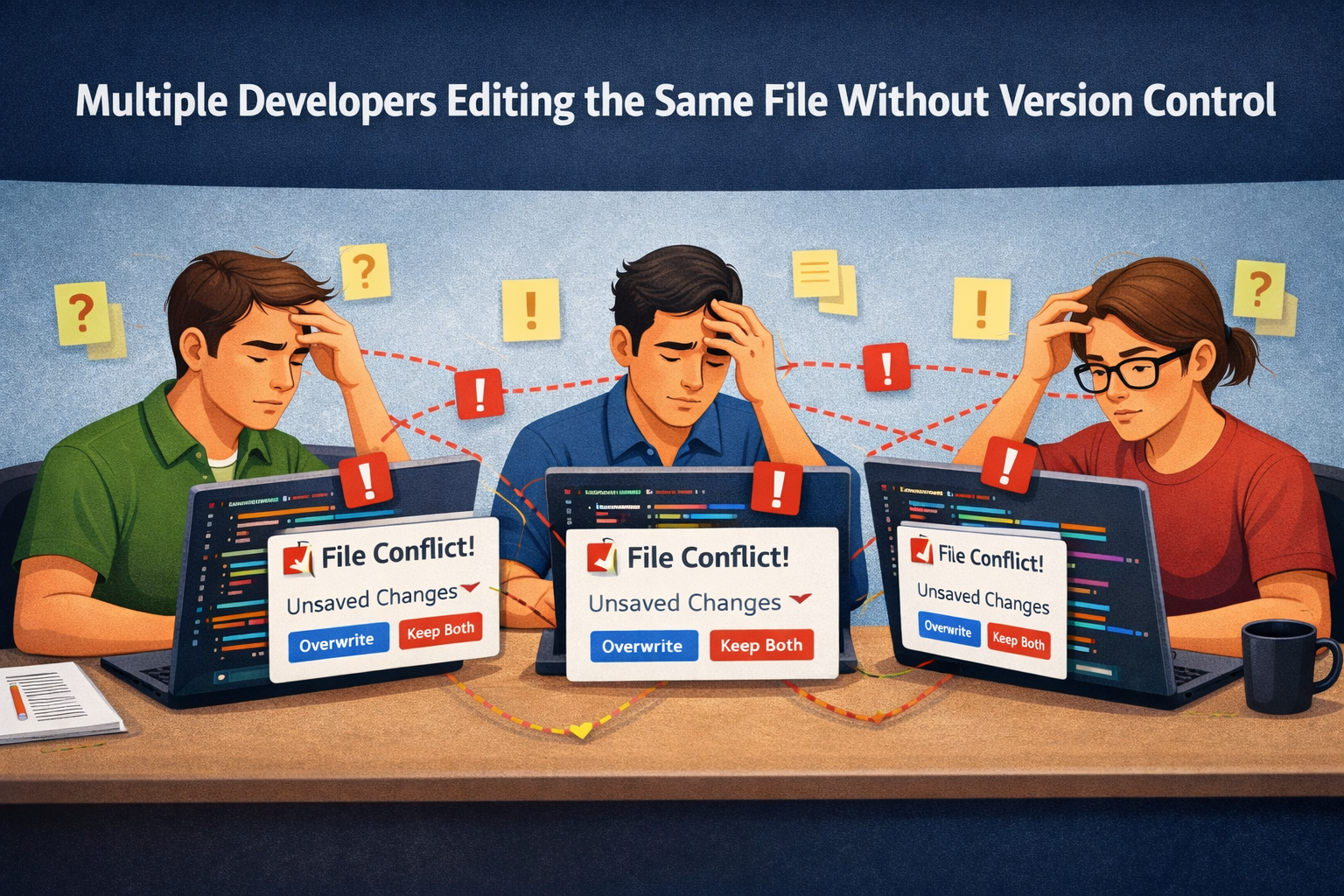
Whoever copies last overwrites the other’s work.
2. Lost Changes
Pendrive gets corrupted
File is deleted by mistake
Laptop crashes
Days or weeks of work can disappear instantly.
3. No Collaboration History
Questions developers couldn’t answer:
Who changed this file?
When was this bug introduced?
Why was this logic added?
There was no record.
4. Confusing File Versions
Developers created manual versions like:
app.js
app_final.js
app_final_v2.js
app_final_v2_fixed.js
app_final_v3_latest.js
No one knew which file was correct.
5. No Parallel Work
Only one person could safely work on the project at a time.
Team productivity was slow and risky.
Real-World Team Collaboration Problems
As software projects grew:
Teams became larger
Codebases became more complex
Deadlines became stricter
The pendrive-based workflow did not scale.
Companies needed a system where:
Multiple developers could work together
Changes were tracked automatically
Mistakes could be undone safely
Why Version Control Became Mandatory
Version Control Systems (VCS) were created to solve these exact problems.
They provide:
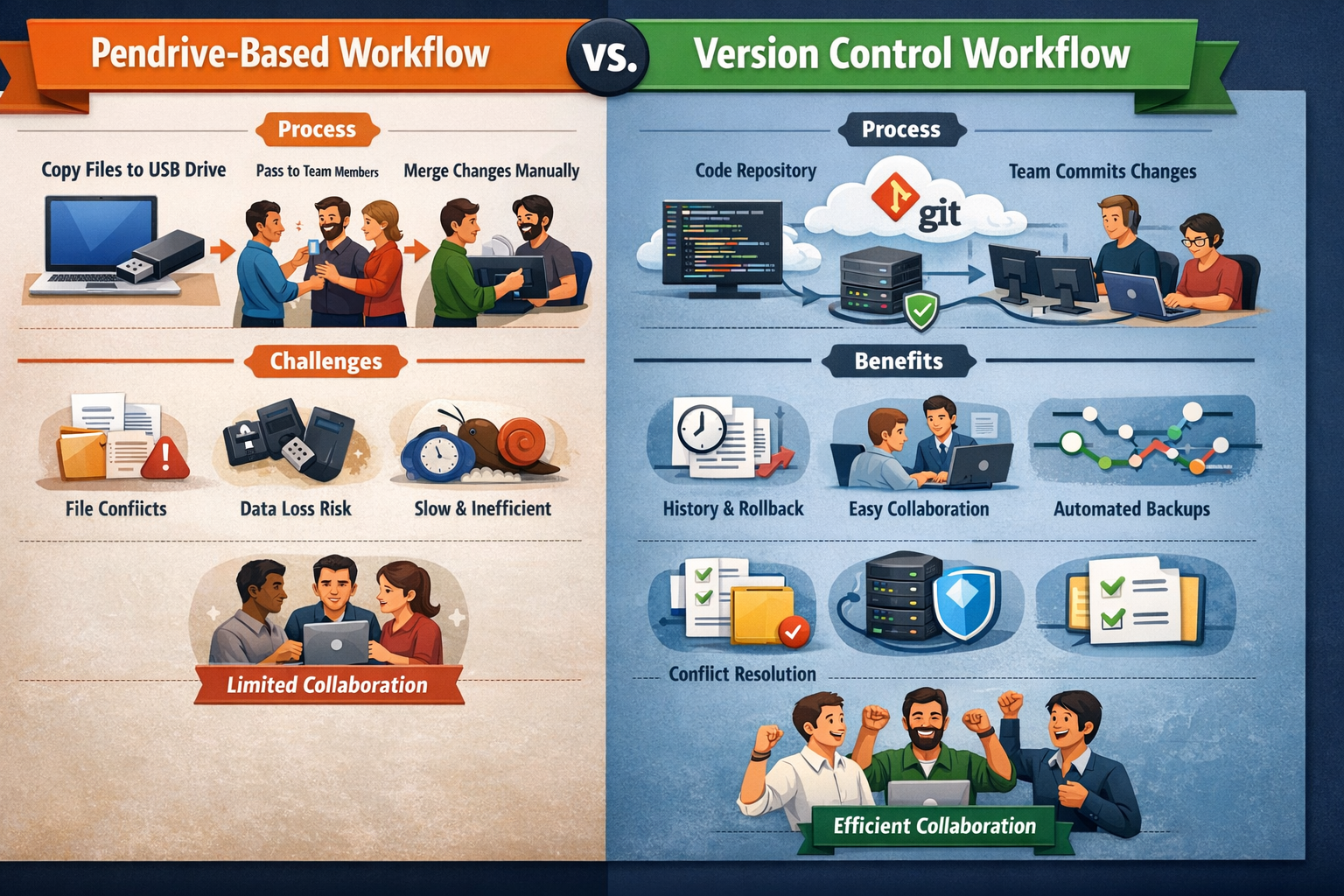
History – every change is recorded
Backup – code is safe even if a machine fails
Collaboration – multiple developers can work together
Accountability – you know who changed what and why
Recovery – you can go back to any previous version
Instead of pendrives and emails, developers use repositories.
Pendrive Workflow vs Version Control Workflow
The Turning Point
The moment teams realized:
“We need to stop losing code and start tracking it”
Version control became essential, not optional.
Today, tools like Git exist so developers never face the pendrive problem again.
Conclusion
The pendrive problem teaches us an important lesson:
Code is valuable, and losing it is expensive.
Version control exists to:
Protect your work
Enable teamwork
Bring discipline to software development
If Git didn’t exist, developers would still be fighting over pendrives.
Thankfully, we’ve moved on.
Comments
Join the discussionNo comments yet. Be the first to comment.